Monument Valley Monoliths
First post of a two-part spotlight sharing our experiences at Monument Valley Navajo Tribal Park — an historic red-rock landscape situated on the Colorado Plateau.
ROAD TRIPPING THE SOUTHWEST
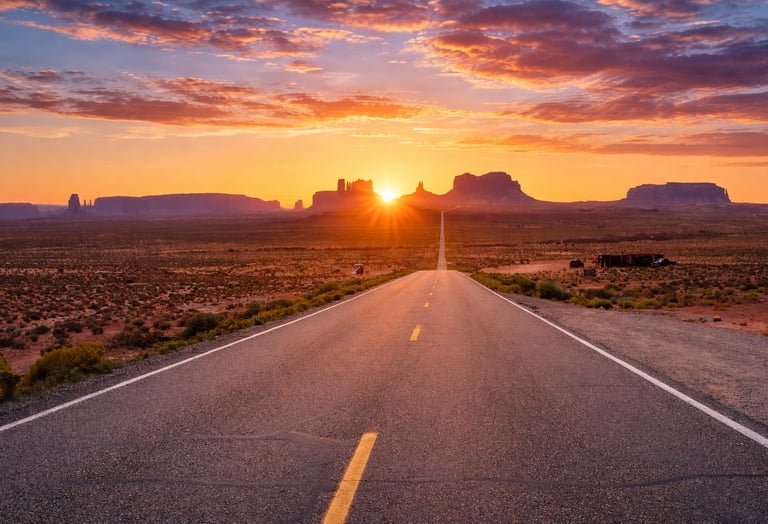
At Mile Marker 13 on scenic U.S. Highway 163, one of the most recognizable images from this region rises from the horizon. Parking my VW at the roadside spot where Forrest Gump ended his cross-country run, I stood in the middle of the deserted byway for a straight-on perspective of this iconic backdrop. “No wonder he stopped running here,” I thought. “It’s hot as blazes on this asphalt!”
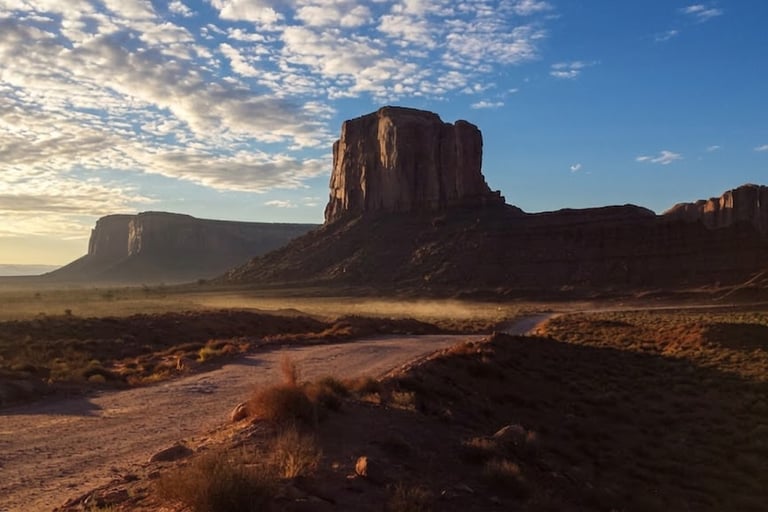
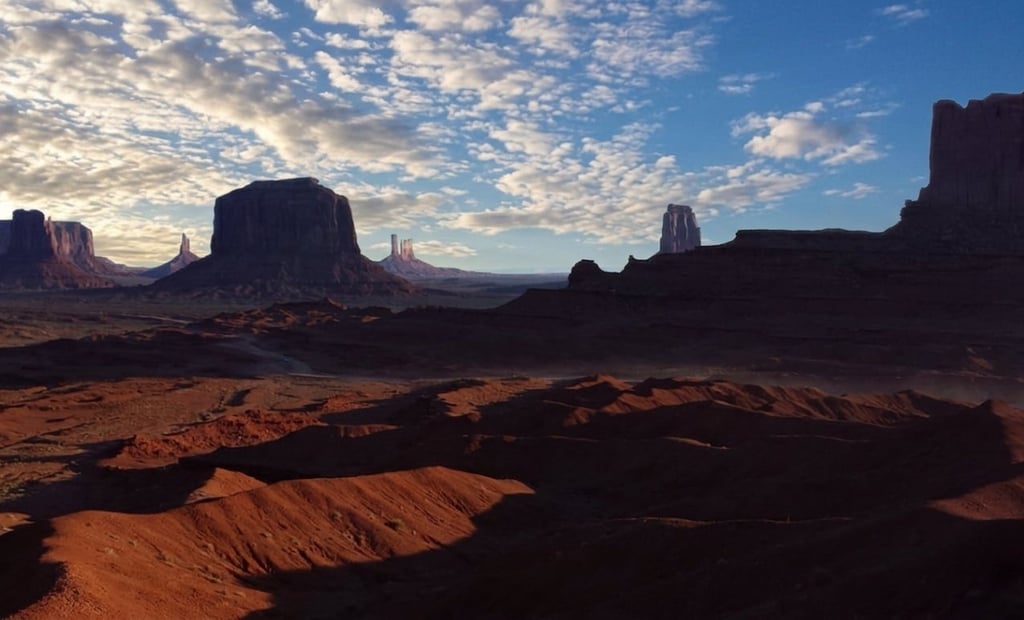
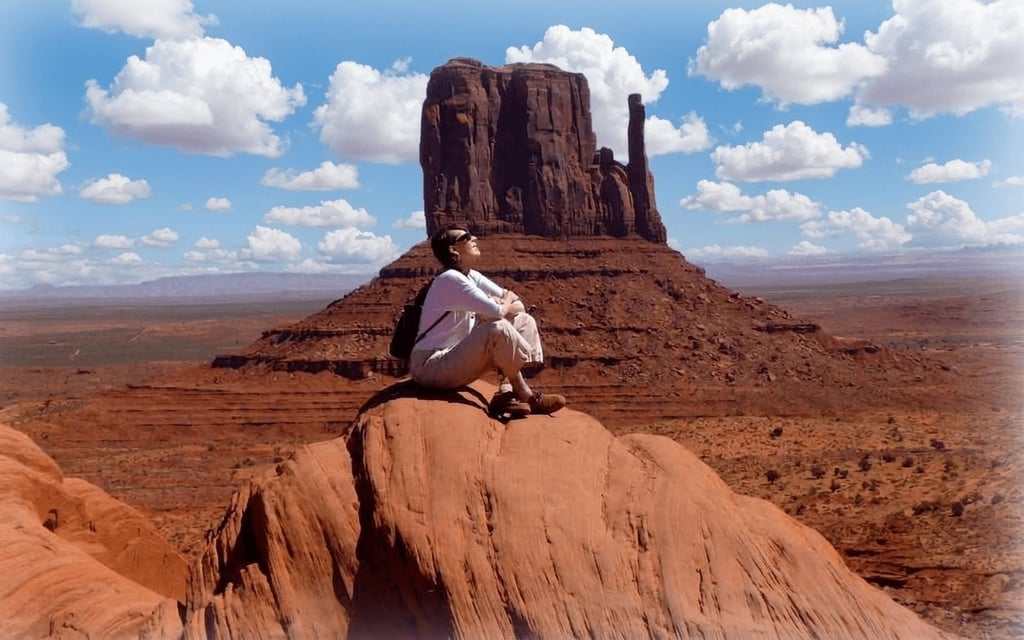
Later, when I climbed a huge boulder overlooking West Mitten, East Mitten and Merrick Butte, I lingered there for the longest time — sensing the history and vibe of the land, and feeling damn happy to be there.
Reverence for the scorched red earth and russet monoliths of Monument Valley is, for me, the compelling draw to this extraordinary land, referred to by the Navajo people as Tsé Biiʼ NdzisgaiI — meaning "the streaks that go around in the rocks" or "valley of the rocks.” Cognizant that these stunning, wind-and-sea eroded rock layers formed millions of years ago during the Permian and Triassic Periods, I wanted to learn more about the land’s spiritual significance from the cultural insights of the Navajo people.
Officially managed by the Navajo Nation as the Monument Valley Navajo Tribal Park, this scenic, red-rock landscape is situated on the Colorado Plateau. Many folks first gleaned sight of Monument Valley from old westerns, and an unforgettable Tom Hanks flick.
Anchoring the Arizona and Utah border near Four Corners, Monument Valley beckons many who feel a connection with the scattered buttes, mesas and spires that dominate this magnificent landscape. I first explored this sacred Navajo ground as a child. Eager to rekindle desert memories, I returned solo for a landmark birthday after relocating to Arizona in 2014.
Besides myself, three other people — all from New York — took this tour. During the bumpy trek, they chattered incessantly and loudly, making it difficult, from my seat in the back, to hear what Harold shared about his experiences in this sovereign land.
At one point, the female tourist quizzed Harold, “Why do the Navajo rugs cost so much here?”
Catching Harold’s glance in the rearview mirror, I winked when he replied to her, “Why don’t you ask the people who make them?” (The day before, when I visited a local rugmaker, I learned it takes about three months to weave a 4x6 Navajo rug design.)
She then remarked that Navajos who live on this land should drill a well to get water.
Harold replied, “Ma’am, that costs a lot of money and we are a poor people.”
She suggested, “Why don’t you take up a collection? You get so many tourists who would each give a dollar or two, which would add up fast.”
As Harold explained it, “Ma’am, drilling a well would bring in a lot of equipment and rip up the land. We prefer to respect the Earth.”
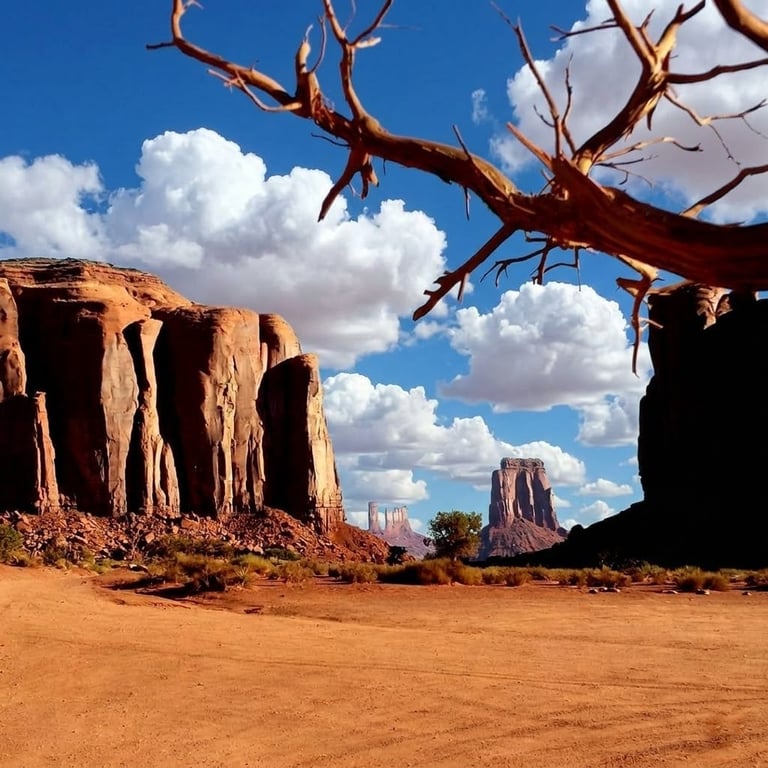
During our high-clearance trek along the dusty, rutted 17-mile loop of Monument Pass, Harold — who was raised in a hogan and herded sheep in this valley as a child — shared Navajo interpretations of the sandstone formations, among them, the twin-summited spire known as Rabbit and Bear, along with Stagecoach Butte and the King on his Throne.
Rounding John Ford's Point, I recognized sites immortalized by the filmmaker in Stagecoach, The Searchers, and other old western movies.
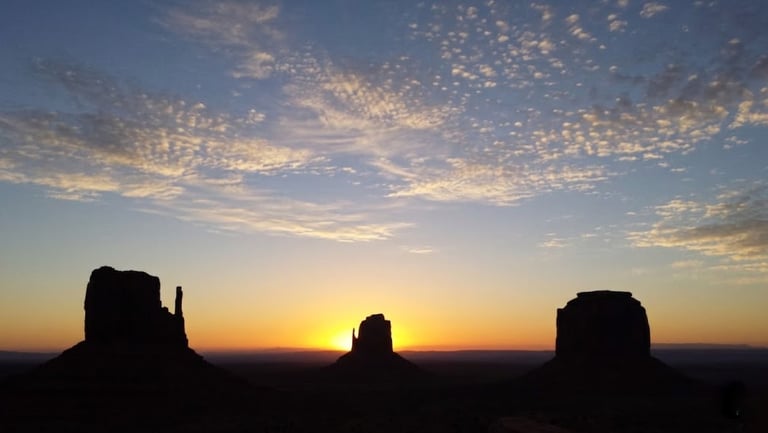
Rising at 5:00 a.m. for a backcountry excursion with Harold Simpson's Trailhandler Tours, I experienced a most memorable sunrise over West Mitten, East Mitten and Merrick Butte.
As blazing shadows cast a riveting scene across the desert — silhouetting the harsh landscape in glowing hues of amber, azure, violet and coral — Harold explained that these three formations, which resemble hands, signify spiritual beings watching over the land. That inspired me to pull the flute from my backpack and play a soft tune for the Ancient Ones.
Witnessing these interactions made me mindful of the ongoing indignities and stuggles forced upon Native Americans. Harold's backstories about growing up here gave me greater appreciation for this sacred land — here long before John Ford and Forest Gump showed up.
❤ v!ctor!a colette
Link to Part Two: Memorable Monument Valley — Holy Ground, Horses and an Off-Grid Hogan
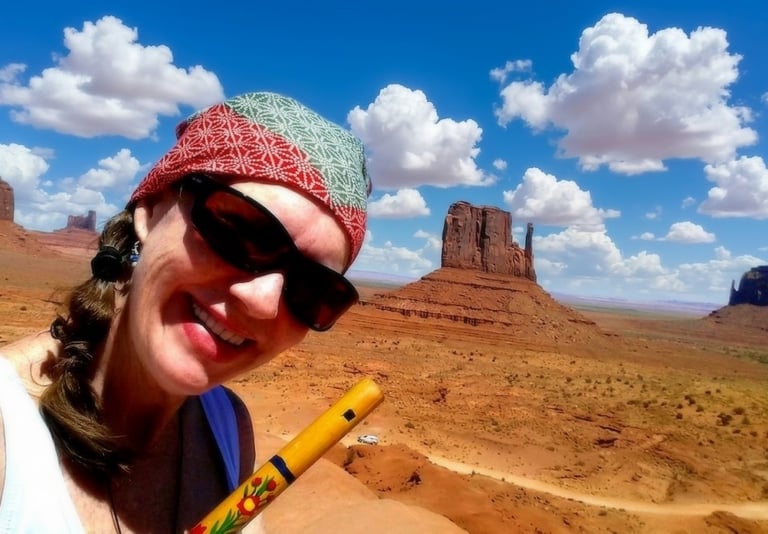
At the heart of the pass, the red-rock behemoth known as Rain God Mesa strikes an otherworldly presence, holding special significance as the spiritual deity that stored water for the people. From a gap in North Window overlooking the lower valley, Elephant Butte and Cly Butte (a Navajo name for “left”) beautifully frame East Mitten, lying three miles north.
Reaching the rounded pinnacle known as The Thumb at the eastern tip of Camel Butte, Harold pointed out that the Thumb more closely resembles a cowboy boot. And while the 150-foot-high formation referred to as The Hub is symbolizes a wagon wheel hub for some, Harold said the Navajos envision it as a fireplace in the center of a hogan.